Create a Digital Fashion Lookbook With Clear Credits
A good digital lookbook lets a viewer understand the outfit rather than merely admire a dramatic image. Build a small sequence that shows silhouette, details and movement, with captions that distinguish a visual concept from a compatible wearable asset. This is an original presentation workflow.
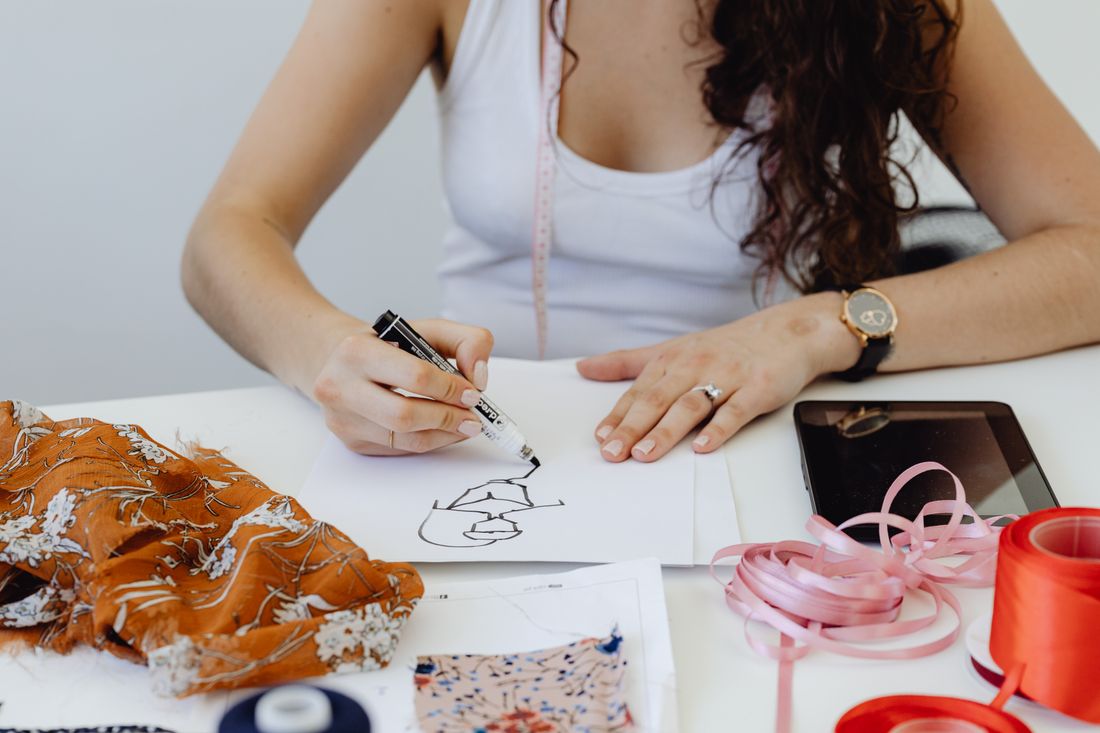
Photo: www.kaboompics.com · License. Illustrative stock photography.
Decide what the lookbook is demonstrating
Write whether the project is a styling concept, a rendered garment, a working avatar outfit or a destination-specific accessory. These are different claims. Choose views that demonstrate the actual output and avoid implying that an image can be purchased or worn when no such delivery exists. If the lookbook includes a future concept, label it as a concept. Give the audience a clear subject, such as one outfit in two color variants, rather than presenting many unrelated experiments without a shared idea.
Build a short sequence of useful views
Start with a readable overall view, then show a side or back view, one meaningful detail and a movement frame when movement is part of the deliverable. Use consistent framing so that variants can be compared. A dramatic close-up is useful only when it reveals something the overall view cannot. Keep the garment boundary visible against the background. If a view hides an unresolved fitting problem, choose a more honest view or document the limitation rather than treating presentation as a technical fix.
Use captions to explain decisions
Write captions that name the visible feature and its role: a compact shoulder outline, a contrasting collar or a simplified accessory shape. Avoid unsupported claims about performance, exclusivity or universal compatibility. When a scene uses a different lighting setup, say so if it affects the comparison. Keep tool and platform names accurate, and identify stock reference photography as reference material rather than an image of your produced asset. Specific captions make a lookbook useful to collaborators who need to understand how the design was built.
Review rights for the public presentation
Check permissions for the character, outfit components, background, poses and any other material you plan to publish. A private reference board may contain material that should not be copied into a public gallery. Build the public lookbook from your own work and material with appropriate terms. Keep a credit list tied to the release version, including required notices. Avoid using another platform’s branding in a way that suggests an official partnership. If you mention a project that is not yet public, describe it as a concept rather than inventing a working product link.
Package a maintainable edition
Name the lookbook edition, date and corresponding project revision. Keep a web-sized export separate from high-resolution working renders. Write descriptive alternative text for meaningful images and make the reading order understandable without relying on image placement alone. Add a short scope note about what has actually been tested or delivered. Save the approved captions with the files so that a later gallery update does not silently change the claims. A smaller coherent edition is easier to trust and maintain than a large collection with unclear origins.
Worked example
For an original city-reader outfit, the lookbook contains an overall front view, a back view, a collar detail and a seated frame. Two palette variants use identical camera positions and lighting. Captions explain that the pale collar keeps the upper silhouette readable and that the bag is a separate accessory. The page labels the work as a desktop-avatar styling study, with no claim of cross-platform wearability. Credits identify the licensed base model and original texture work. A dated scope note lists the destination used for the review. The final edition communicates both the visual idea and what the project actually contains.
Your working checklist
Checkmarks stay in this browser when storage is available. They do not submit a form or complete a booking.
Put it into practice
- Define the claim the lookbook should support, then choose a small sequence that demonstrates that specific output.
- Capture consistent overall, detail and movement views. Keep comparable variants under the same conditions.
- Write concrete captions and review the rights for every published component, including backgrounds and references.
- Publish a dated edition with useful alternative text, accurate scope and credits that match the actual project.
Before you finish
- Output type is labeled
- Views answer different questions
- Variants are comparable
- Public permissions are checked
- Edition and scope are clear
Common questions
Does every lookbook need a moving image?
Only when movement matters to the claim. A still styling concept can be presented honestly as such; a wearable character benefits from a documented motion review.
Can I include stock references beside original renders?
Make their role explicit and follow their terms. Do not caption stock photography as proof of your own asset, tool result or testing.
Should I link to Parallel World immediately?
Use a real public destination only when it exists and its purpose is clear. A concept article should not invent a working signup, product or affiliation.