Review Avatar Performance with the Target Platform’s Current Guidance
A visual showcase does not describe how costly an avatar is to display. Read the current target limits, identify the components that matter and test a permitted build rather than chasing a single universal number.
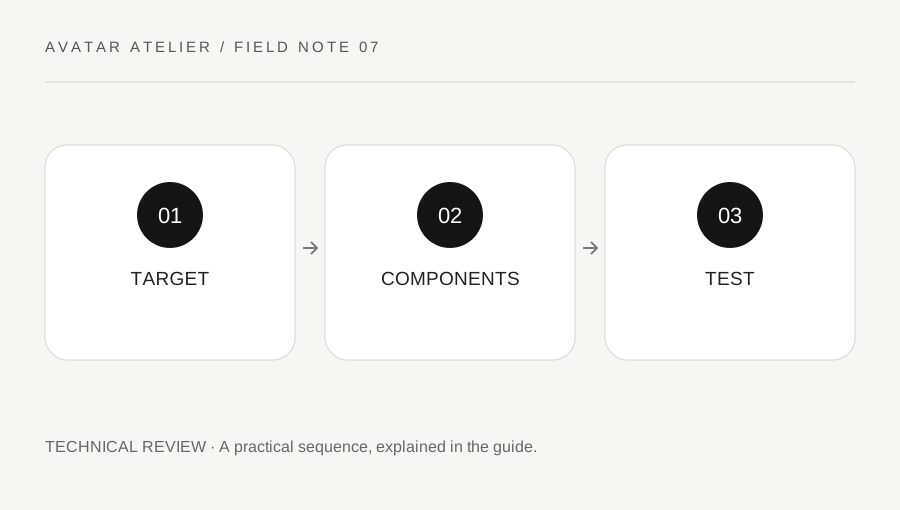
Original explanatory diagram. Examples illustrate a method or decision; they are not claims of personal testing.
Choose the actual target environment
Record the intended platform, device class and avatar workflow. Requirements and supported components can differ, so do not combine a limit from one destination with a feature assumption from another. Read the current official documentation before planning optimization. This article deliberately does not publish a static threshold table that may become outdated.
VRChat's performance-rank documentation describes a component-based guide and explicitly limits what that ranking can establish. Roblox has its own validation process. Treat each as the system it is, not as an interchangeable quality certificate. A passed check and a pleasant visual preview answer different questions.
Identify the heaviest relevant parts
Use the target's supported reporting tools to inspect the actual avatar. Record the component or category that appears to need attention, then relate it to the intended design. Do not remove a defining feature blindly because a generic tutorial says every avatar must use the same layout or detail level.
Keep the source version and permissions clear before editing. If a component belongs to another creator, verify that modification is allowed. Make a controlled working copy and choose one justified change. An optimization plan should preserve a meaningful comparison and a way back, rather than replacing the entire asset and guessing which change mattered.
Compare a small supported revision
Imagine the target's report points to a particular optional component as costly. The creator makes a permitted simplified variant and tests the same ordinary viewing and motion conditions. They compare the report, actual usability and intended appearance, keeping the original reference available.
They do not claim a universal percentage improvement from one subjective observation. If no meaningful measurement was made, the note says what was directly observed. The example is an optimization process, not a benchmark or a promise that one reported rank captures every device, world and viewing condition.
Review validation and ordinary use separately
Follow the destination's current validation and upload instructions through the authorized account. Do not bypass a failed check or assume that an editor-only preview proves publication eligibility. Then perform an appropriate ordinary runtime review where permitted, considering the actual supported feature set and intended use.
Keep known limitations in the delivery note. A build tested in one environment should not be described as verified everywhere. Avoid promises that a particular avatar never causes slowdown or works identically on every device. A useful performance review identifies current requirements, a justified revision and a tested scope while preserving the character's intentional design.
Keep the optimization decision traceable
Record the source version, changed component, report or test used and the accepted result. If a later edit restores an expensive feature, the note helps explain why the earlier decision was made. Do not retain only a success screenshot with no conditions. A compact project record can make future work more efficient without claiming laboratory precision. Recheck official guidance when the target or SDK changes rather than treating the old accepted build as permanent evidence of current compatibility.
Keep the original report beside the revised one with the same target and review context identified. A number from another device, world or configuration may not be directly comparable. If the test conditions changed, record that and avoid attributing the full difference to one edit. A useful performance note explains what was compared and what remained uncertain, allowing a later collaborator to repeat the relevant check rather than trust a bare success label.
A practical checklist
Choices are saved in this browser. Reset them here or clear this site’s browser storage.
Questions that come up
Is one rank a complete performance guarantee?
No. Use it within the official system’s stated limits and test the intended environment appropriately.
Should I copy another platform’s limit?
No. Read the current requirements for the actual target and workflow.
Can I claim a percentage improvement without measurement?
No. Describe the actual observation or measurement and its conditions.
References & scope
Background references checked on 18 October 2026. Worked examples and diagrams are original teaching material.