Avatar Eye Gaze and Blinking: Test Direction and Closure Separately
Gaze direction and blinking can interact, but they are not the same feature. Verify the target system, inspect each behavior and test the combinations the avatar is expected to use.
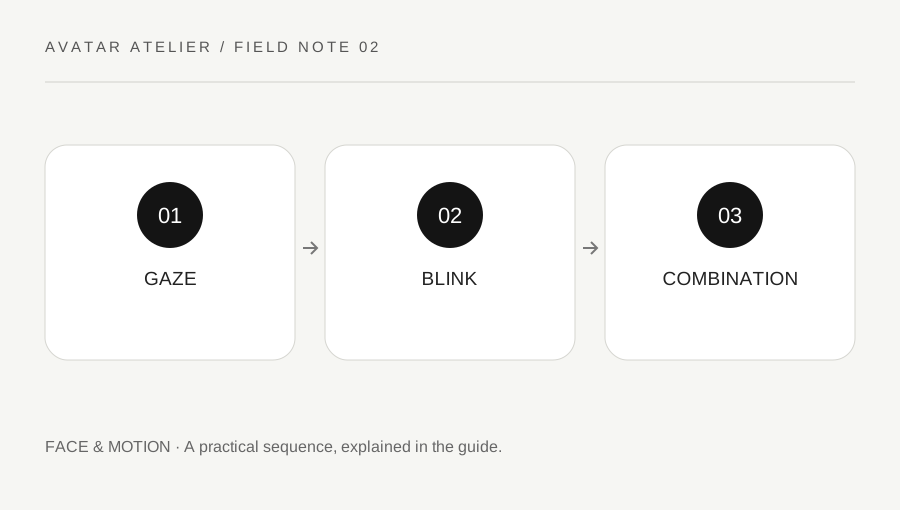
Original explanatory diagram. Examples illustrate a method or decision; they are not claims of personal testing.
Identify the supported eye system
Read the format and application documentation for look direction, eye bones, expressions or other supported approaches. VRM's look-at documentation distinguishes its gaze setup and version-related structure. Do not assume a model using one method can be adjusted with controls intended for another without a proper supported conversion.
Record the current setup before changing it. Keep an accepted neutral face and a versioned working copy. If the avatar is based on a third-party model, confirm modification and publication permissions. A small eye adjustment can still be a modification to someone else's asset and should remain within the relevant agreement.
Review gaze in a small consistent sequence
Use the destination's supported controls to look forward, left, right, up and down within the intended range. Check both eyes and the visible surface around them. Look for an unintended direction, an eye leaving the visible opening or a mismatch that appears only near a limit. Do not push a test beyond supported ranges merely to produce a dramatic failure.
Keep the head position and viewing camera understandable. A changed camera angle can make a gaze direction appear different without changing the underlying setting. Record the exact state and a useful image or note. A reproducible directional issue is easier to address than a vague impression that the eyes feel odd.
Test closure before emotion combinations
Review a supported blink or eye-closure state on its own. Inspect the eyelid edge, visible eyeball and nearby face surfaces. Then combine it with the expressions you intend to support, following the system's interaction rules. Do not assume a clean neutral blink establishes every emotional state.
Imagine a model closes its eyes cleanly when neutral but leaves a visible gap during one expression. The creator records the combined state and revises the relevant supported setup or shape, then repeats the neutral and combined checks. This example is a method, not a universal numeric fix or a claim that every avatar needs the same eyelid geometry.
Verify behavior in the exported avatar
Use an authorized test in the actual destination application, because the authoring preview and runtime can interpret supported features differently. Confirm the intended format version and importer. Do not apply an older tutorial's component names blindly after an update. Read the current migration or setup guidance when the system changes.
Keep the review result bounded to the tested application and states. If another platform has not been checked, label it untested rather than promising identical eye behavior everywhere. A useful eye review produces a known gaze and blink routine with clear limitations, not a claim that a single export guarantees perfect expression compatibility in every viewer.
Keep the face’s intended style in the decision
Stylized eyes need not imitate a realistic face to be successful. Judge whether the motion is deliberate, readable and free of unintended technical problems for the chosen design. Separate a style preference from a binding or deformation issue. A concise reference sheet can show the accepted forward view, closure and one combined expression. This helps later revisions preserve the intended character while still allowing a technical correction to be tested honestly.
Repeat one gaze test with an ordinary supported head turn and distinguish eye direction relative to the head from the viewing camera. Otherwise, a changed viewpoint can be mistaken for a changed gaze setup. Record the intended target and the actual direction. This small reference helps explain a problem to another authorized collaborator without requiring them to guess which combination of head, eyes and camera produced the image.
A practical checklist
Choices are saved in this browser. Reset them here or clear this site’s browser storage.
Questions that come up
Is blinking the same control as look direction?
No. Treat them as separate features and inspect their supported interaction.
Can one viewer prove compatibility everywhere?
No. Record the actual destination and label other environments untested.
Must stylized eyes behave like realistic eyes?
The style can be deliberate. Separate that choice from unintended technical failures.
References & scope
Background references checked on 18 October 2026. Worked examples and diagrams are original teaching material.